
Learning to 'winter'
Pomegranate moment #2

Winter came in April for me, after my PhD upgrade viva did not go to plan. I found myself suddenly in a kind of suspension – waiting, uncertain, disconnected from the work I thought I understood. In the midst of that disorientation, a friend lent me Katherine May’s Wintering. May writes:
“There are gaps in the mesh of the everyday world, and sometimes they open up and you fall through them into Somewhere Else. Somewhere Else runs at a different pace to the here and now, where everyone else carries on. Somewhere Else is where ghosts live, concealed from view and only glimpsed by people in the real world. Somewhere else exists at a delay, so that you can’t quite keep pace.” – May, Wintering
That was where I was in April. I’d fallen through a portal and found myself in a deep, personal winter.
A doctorate, or any long, personal undertaking, can very quickly start to assume the roof over our heads and the four walls around us. So when something falters or goes wrong, it can feel like a catastrophe. An internal winter. As I’ve been pondering what I want to say to you in this final post of 2025, I keep circling back to this idea in May’s book of winter as both a season in nature and a season within us. “Winter,” she says, “offers us liminal spaces to inhabit. Yet still we refuse them. The work of the cold season is to learn to welcome them.”
If these metaphorical winters are inevitable, how might PhD students, or anyone on a learning journey, become better at wintering?
I recently stumbled upon a thought-provoking article by Sherran Clarence titled “Do we have to suffer to get a doctorate?” (to which the answer is, of course, yes!) that introduced me to the idea of ‘threshold concepts’. These are certain moments in learning that act as ‘portals’ that “[open] up a new and previously inaccessible way of thinking about something” (Meyer and Land, 2003). In my own language, these portals resemble what I’ve called pomegranate moments. But, as Clarence points out, the difficulty sometimes comes before the moment of clarity:
“The learning involved in grasping and crossing these thresholds is not linear; it is iterative and is both head work and heart work, meaning it’s not just intellectual, but also required me to have faith in myself, talk myself out of some deep holes of self-doubt, and trust that my supervisor meant it when she said I was on the right track.” – Clarence, Managing ‘liminality’ in (doctoral) research
In trying to grasp or cross one of these thresholds, we often find ourselves in a liminal space – a period of winter where progress feels stalled and uncertain. Meyer and Land describe this as an uncomfortable but normal phase of learning: a period marked by what David Perkins calls “troublesome knowledge,” where ideas run counter to our intuitions or disrupt what we thought we understood. This might be a point where familiar research methods stop working, or where our previous certainties lose their footing, and where turning back feels easier than moving through.
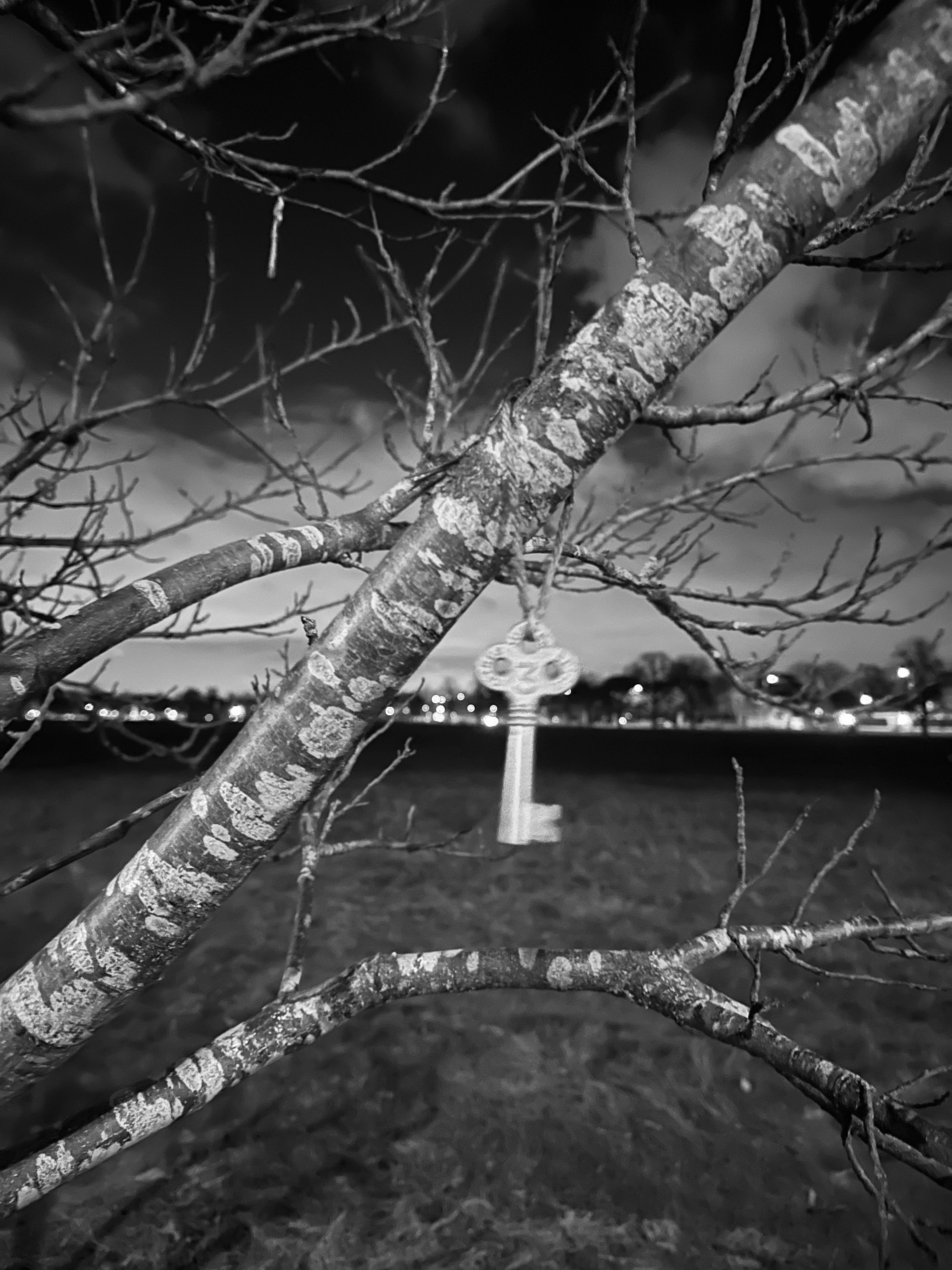
Part of learning to “winter” is becoming comfortable with this ambiguous ‘in-between’. Doctorates are famously described as lonely journeys through unfamiliar territory, and there’s truth to that. Liminal spaces are so often depicted as empty rooms, long corridors, abandoned airports. If the purpose of doctoral research is generate and share new knowledge, then of course we will find ourselves in these uninhabited corridors. Maybe learning to winter is about continuing to walk even when you can’t see where the hallway leads.
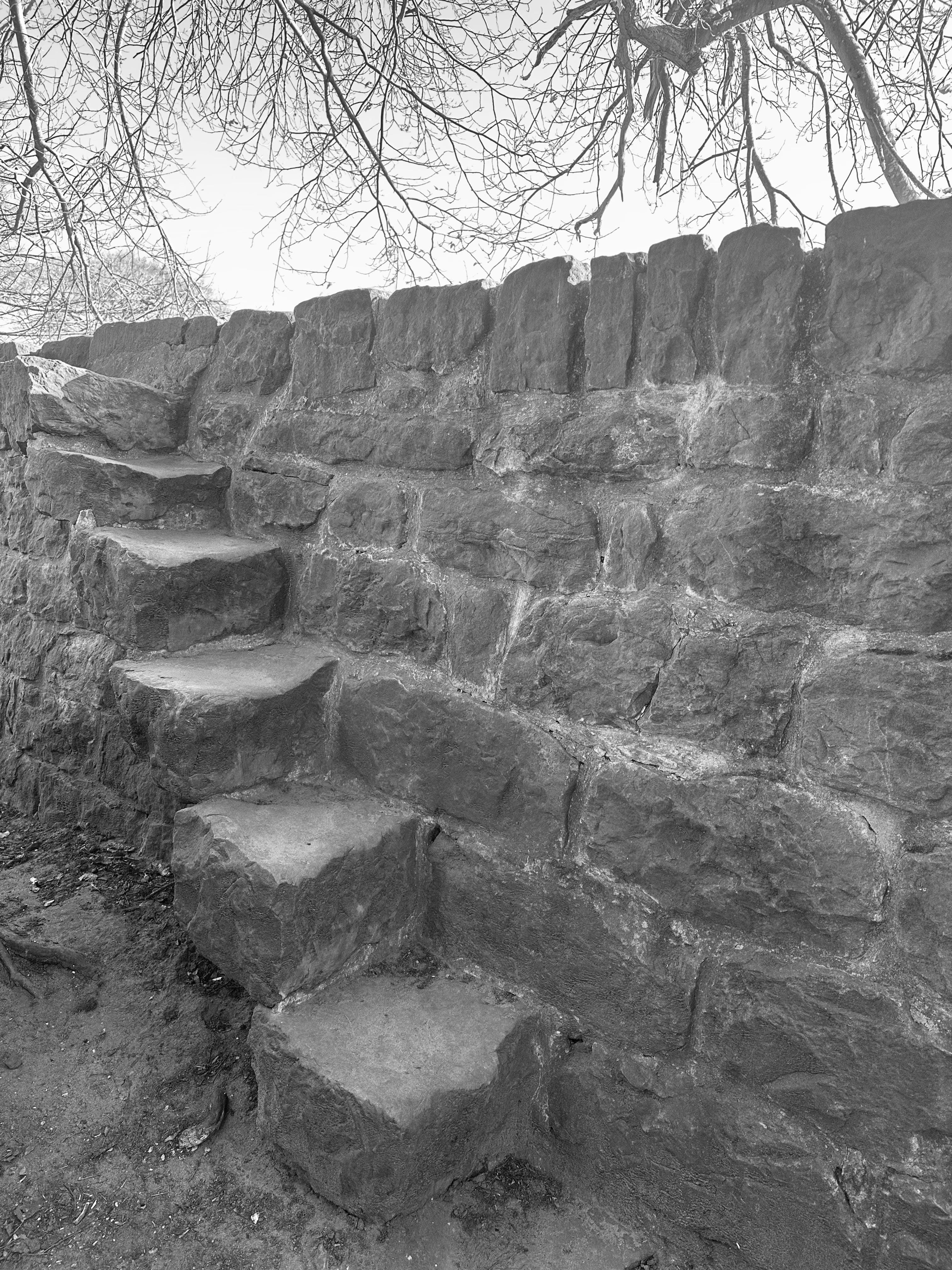
Another part of wintering, I think, is accepting that the journey is not linear. Progress rarely moves in a straight line; it loops, stalls, doubles back, and sometimes brings you back to where you’ve been before. Knowing this in theory is easy, but accepting and living with it is harder. This acceptance has become a daily practice (sometimes a daily struggle) for me, of recognising when to work and when to pause, when to push forward and when to set something down for a while. Even a single day has its own seasonality; hours of productive effort, and hours of rest. The winters matter as much as springs, summers and autumns.
“The starkness of winter can reveal colours we would otherwise miss…Life goes on abundantly in winter—changes made here will usher us into future glories.” – May, Wintering

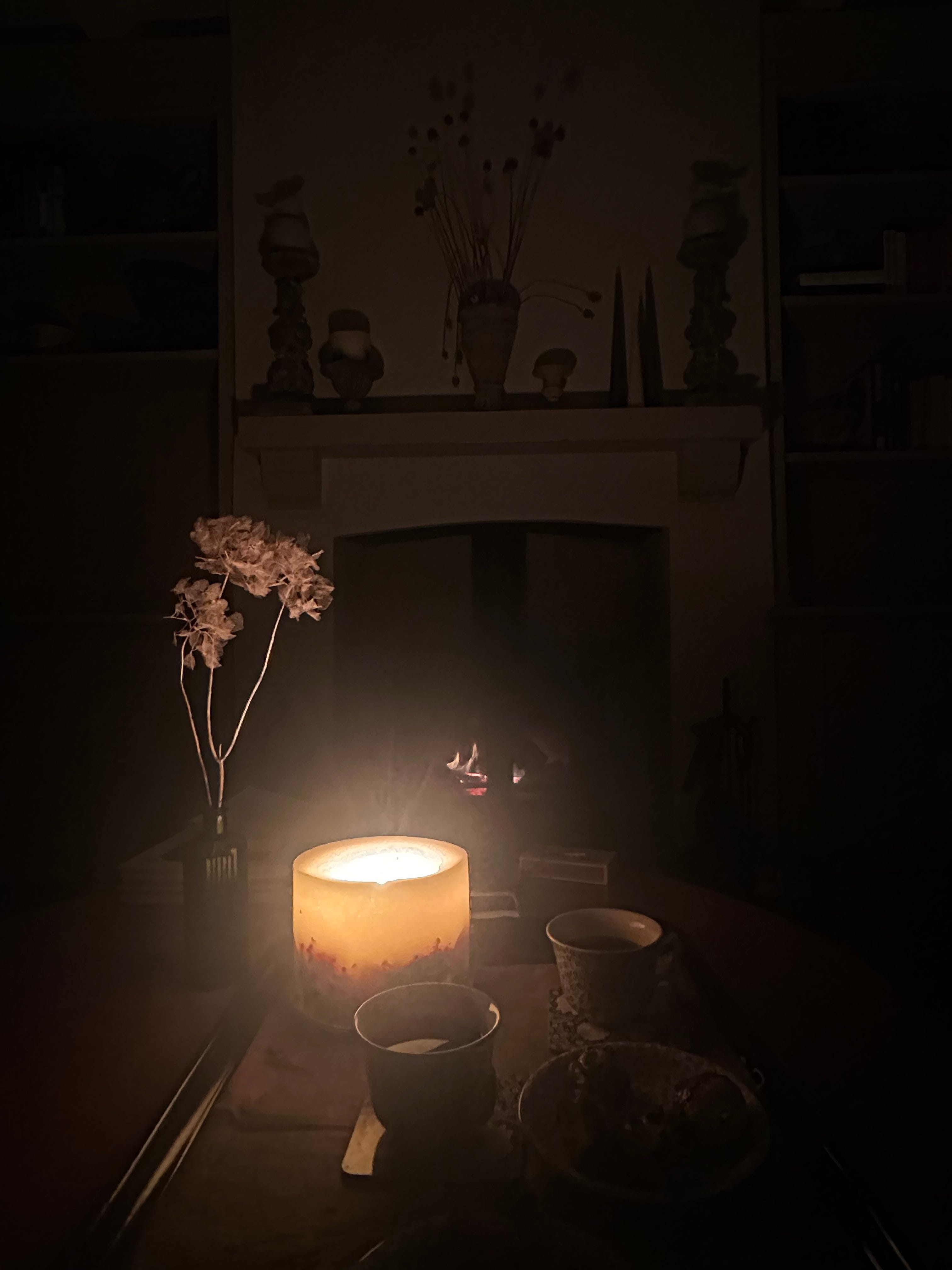
I’ve seen this very often in my students, where some time away from practice was just what was needed in order to master a particularly difficult musical passage. I love seeing the look of surprise and realisation (pomegranate moment) that the work has continued in the background, out of sight. Noticing when to step back and rest – to put the instrument back in its case, to close the chapter draft, to turn the canvas around – is part of the work. Stepping away can allow us to return with eyes that see and ears that hear differently.
“We are in the habit of imagining our lives to be linear, a long march from birth to death in which we mass our powers, only to surrender them again, all the while slowly losing our youthful beauty. This is a brutal untruth. Life meanders like a path through the woods. We have seasons when we flourish and seasons when the leaves fall from us, revealing our bare bones. Given time, they grow again… To get better at wintering, we need to address our very notion of time. We tend to imagine that our lives are linear, but they are in fact cyclical… The things we put behind us will often come around again.” – May, Wintering
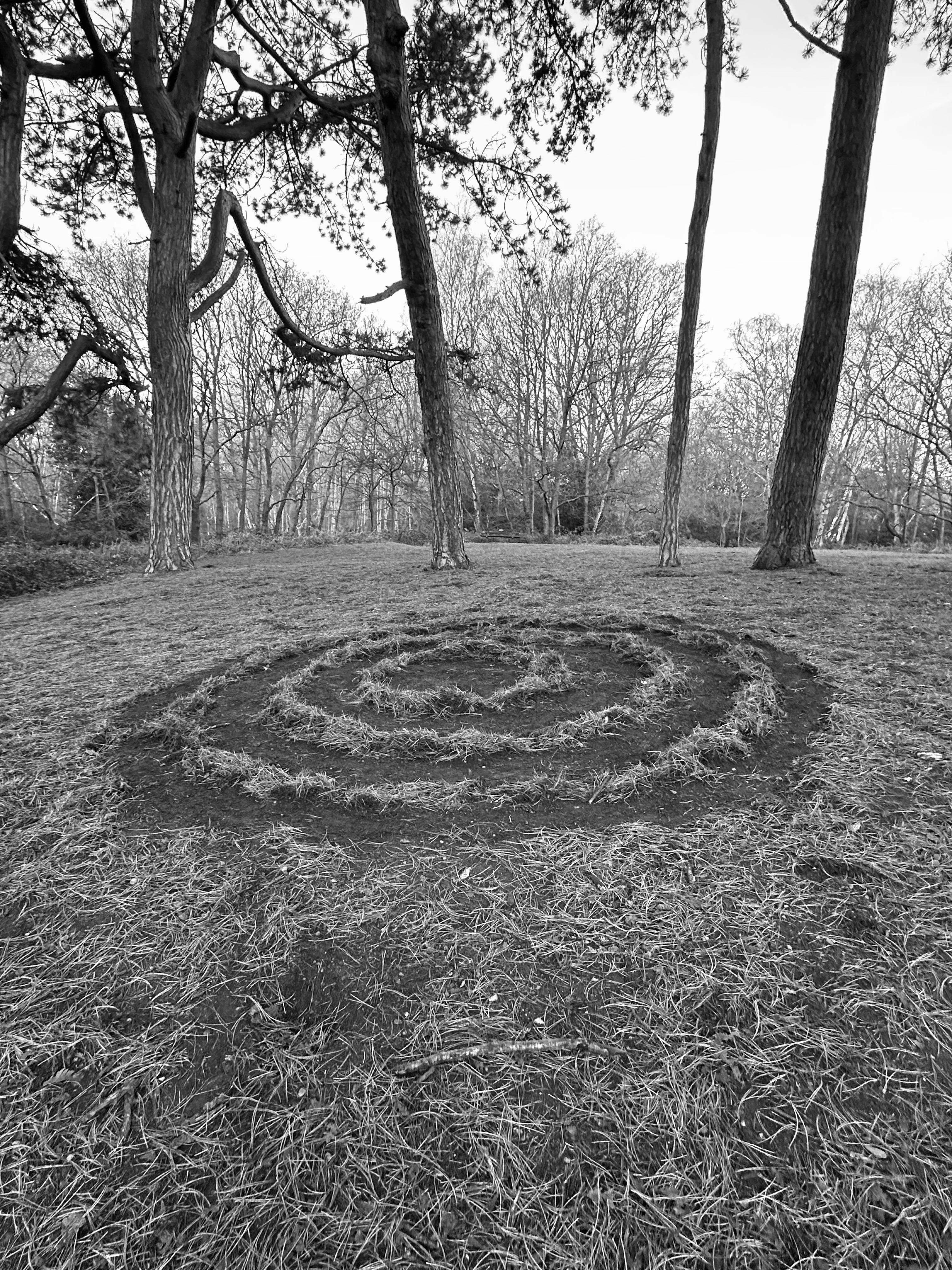
Wintering, I think, is also about becoming comfortable with repetition and, in short, with ritual. Doing things again, returning, revising. Chapters are rarely written from beginning to end, nor are pieces learnt from start to finish. Work and practice loops back on itself. We revisit research questions, bars, sections, re-read data, rephrase things, and sometimes start again from scratch. This recursive movement is built into the nature of learning itself. As Land and colleagues argue, learning is “excursive”: a journey with a direction in mind, but one that expects deviation, detours, and unexpected outcomes.
“[T]here will be digression and revisiting (recursion) and possible further points of departure and revised direction. The eventual destination may be reached, or it may be revised. It may be a surprise. It will certainly be the point of embarkation for further excursion.” – Land et al. (2006), quoted in this article
In other words, learning unfolds through repeated returns. It is in these loops, in the ritual of practicing an instrument or returning to a passage of writing each day, that new connections emerge, and, occasionally, a pomegranate moment bursts into view. As May writes about prayers, rituals can “open up a space in which to host thoughts that I would otherwise find silly or ridiculous: that voiceless awe at the passing of time. The way everything changes. The way everything stays the same. The way those things are bigger than I am, and more than I can hold.”
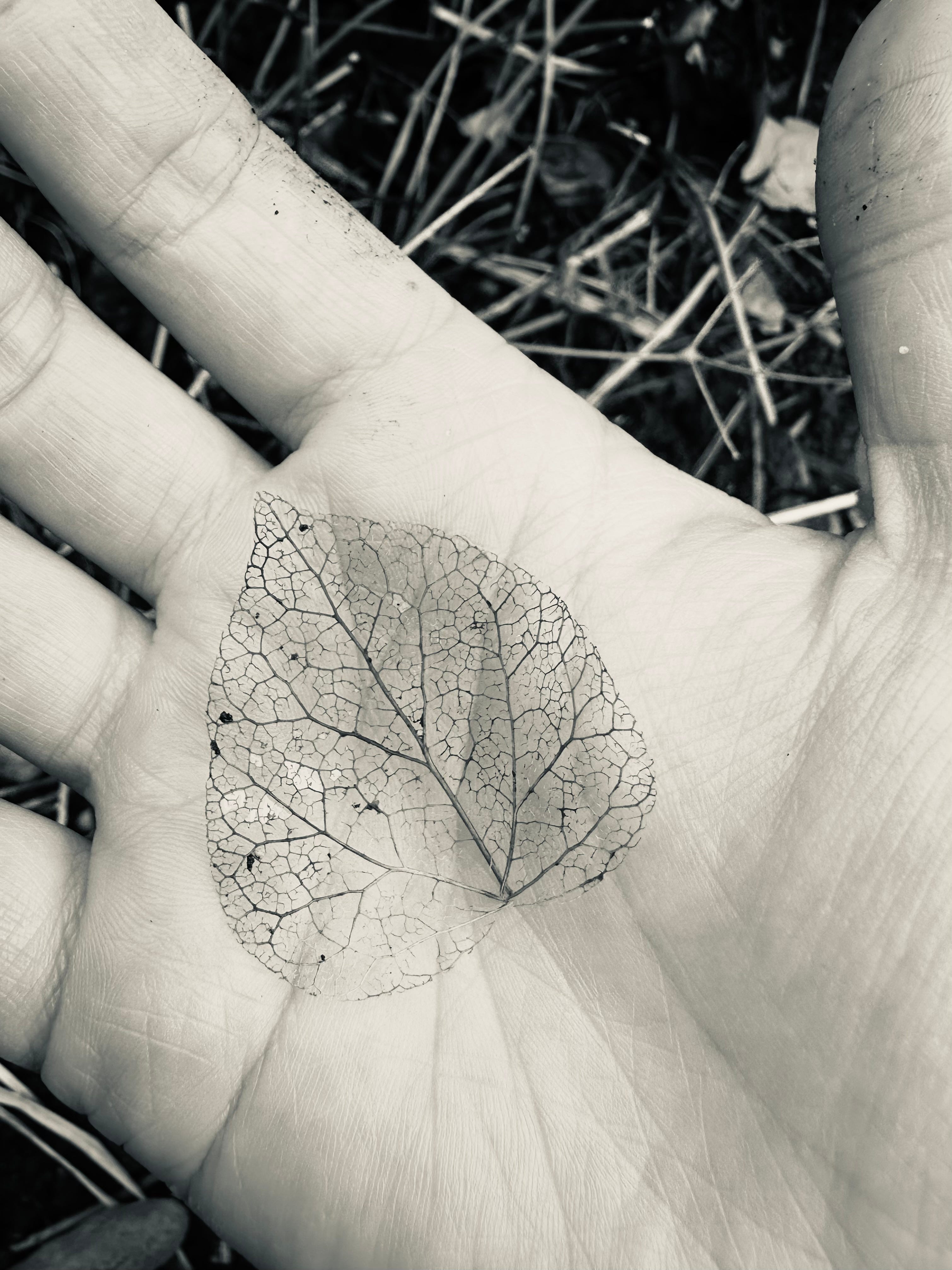
How I came out from that winter earlier this year, I’m not sure. Maybe it was simply a case of waiting until I could believe in myself again. As May notes in a recent podcast, the real work of wintering is in leaning into it, because, even when everything feels stark or frozen, life is preparing itself beneath the surface. Like the trees in winter, she reminds us, there are buds already in place, waiting for their moment to bloom.
Thank you to my 52 readers (especially Catherine, my paid subscriber) for being here this year. It means an immense amount. I hope to write here a little more often next year. Let me know if you have any thoughts, strategies, or small rituals that help you through your own winters – I’d love to hear them. See you in 2026.
Te quiero . Im your fan .
Thank you Elisabet. I enjoyed this article so much, perhaps because I think I may be wintering at the moment. I had no idea you were back in April - we don't see too much of each other, perhaps one has to know another rather well to be able to detect seasons? Mark